
Leopard Gecko Care Sheet
Leopard Gecko
Scientific Name: Eublepharis macularius
Introduction:
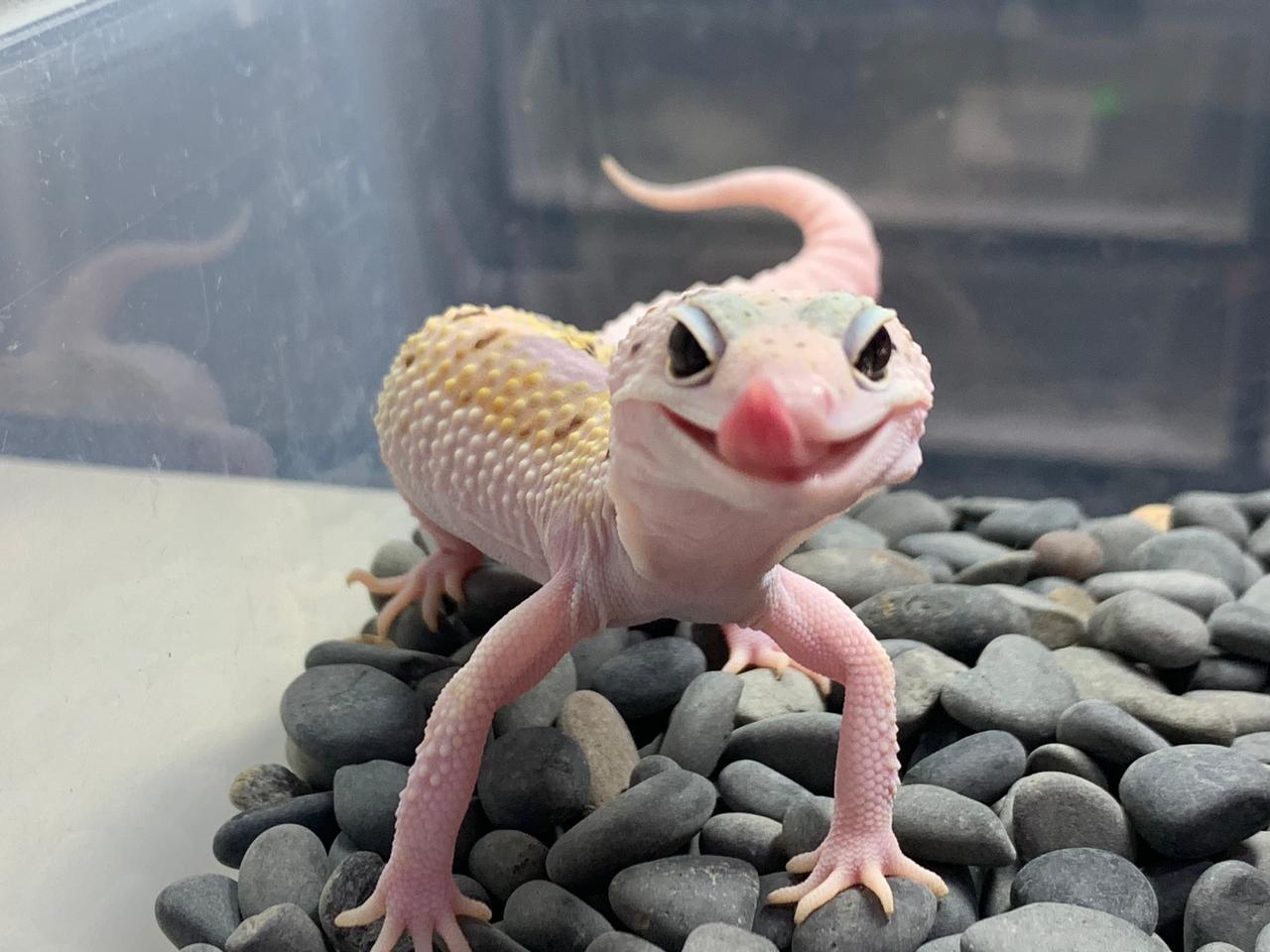
Next to Tarantula and Snake keeping, Leopard Geckos are one of the easier exotic pets to keep today, and their requirements are absolutely worthy of most people’s budget.
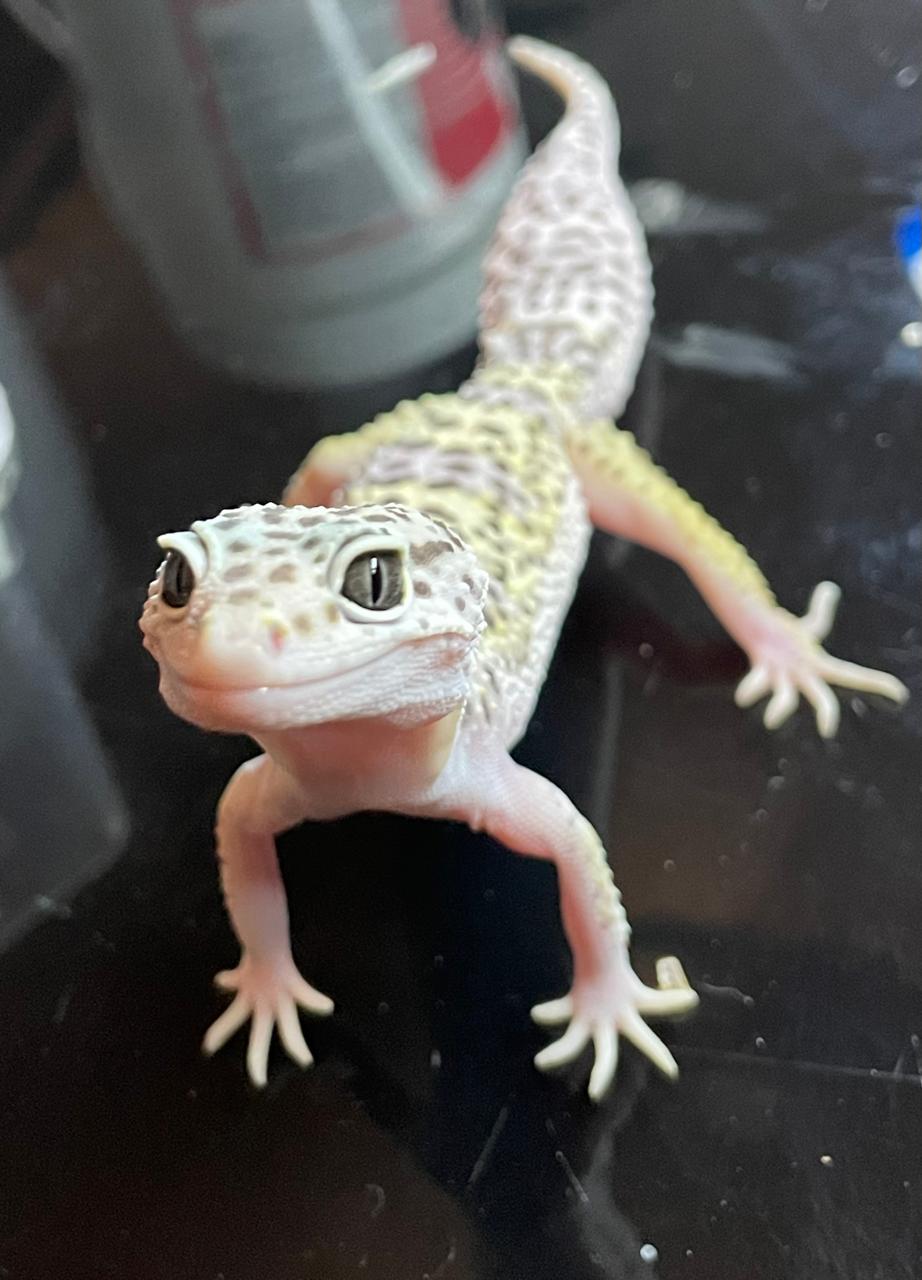
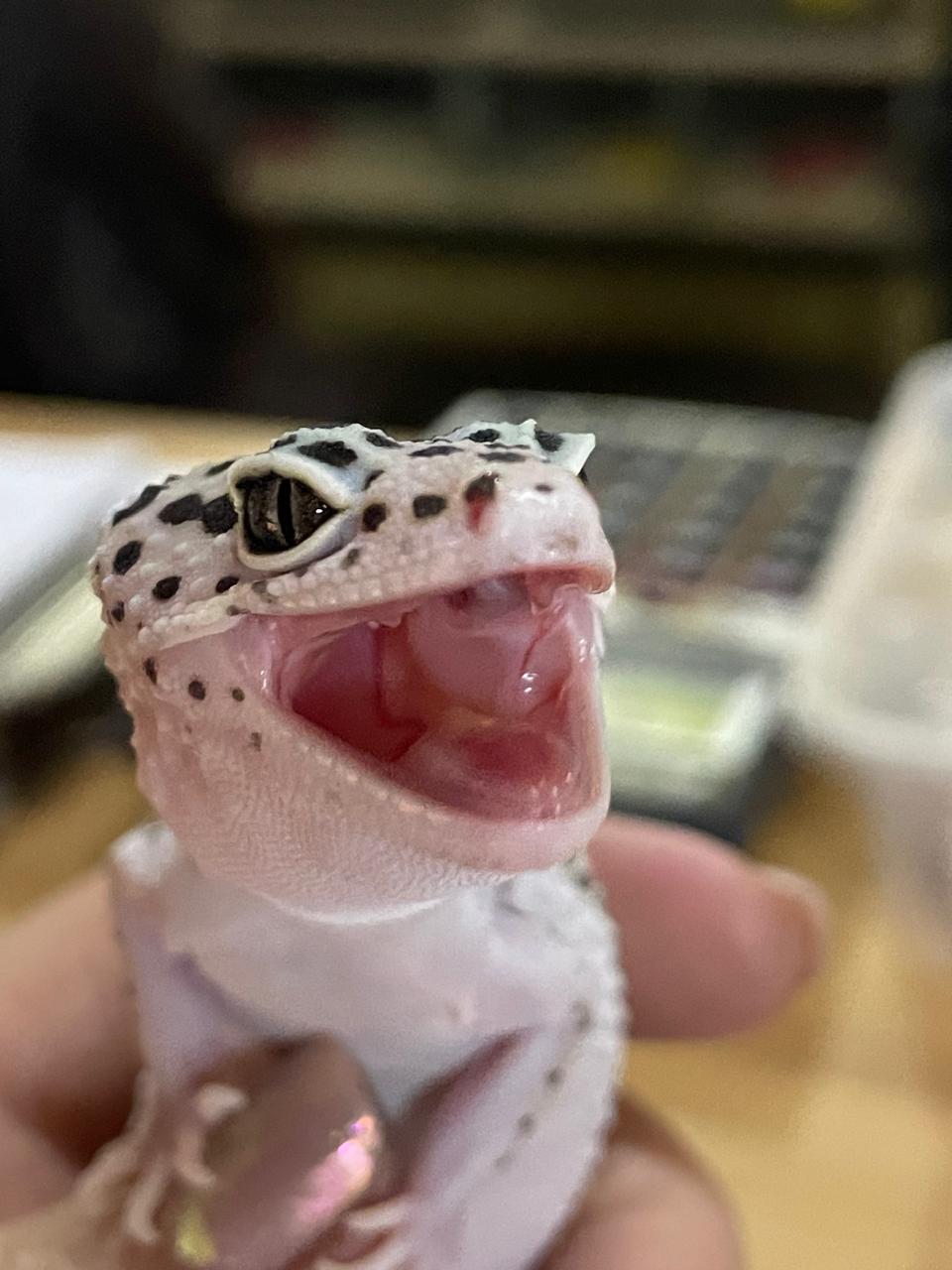
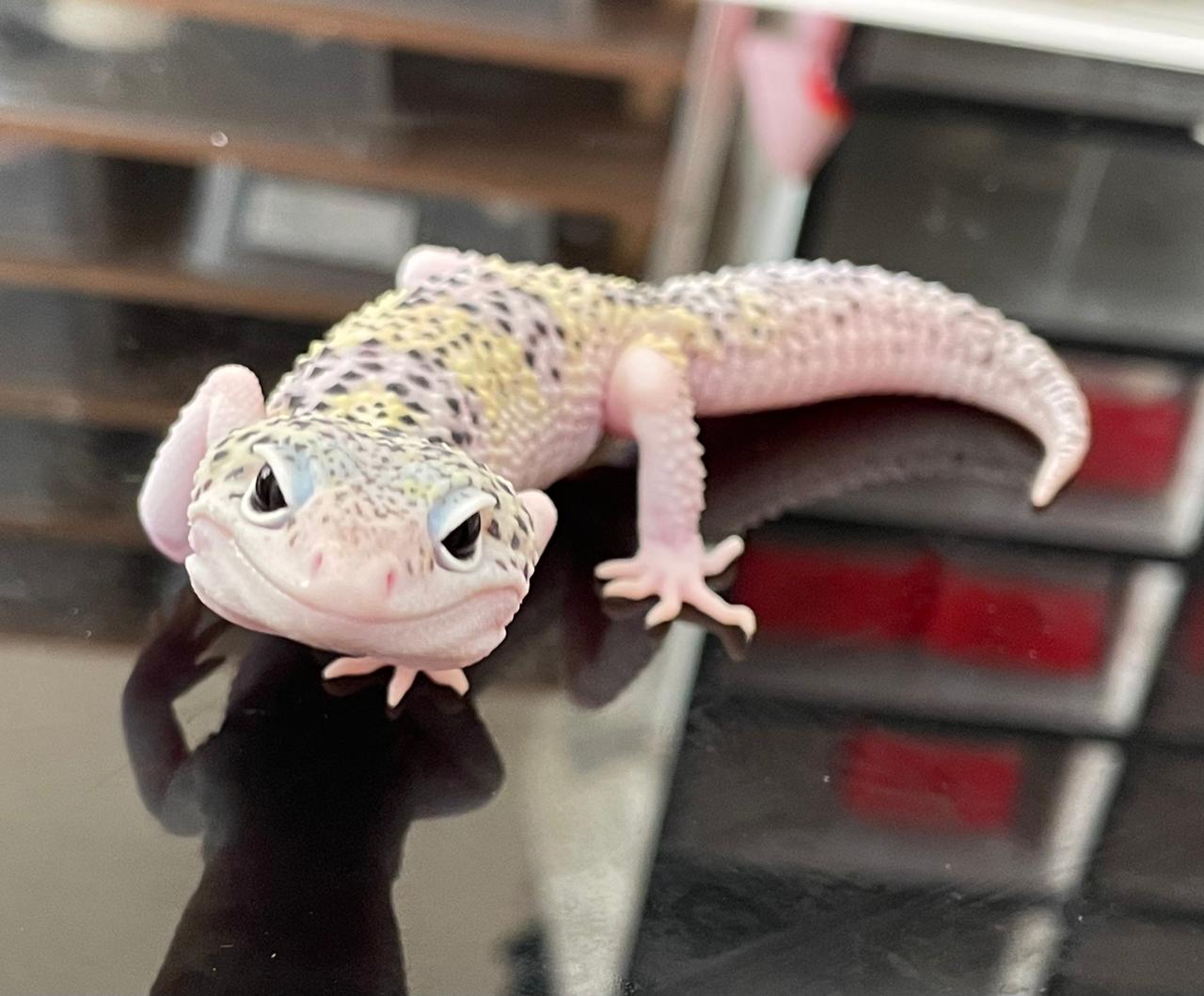
They are always ‘smiling’ and their unique personalities make for a great pet.. whether you are at novice or advanced level, as an Exotic Pet Keeper. They are hardy, and tend to grow really fond of their owners, and everyone that regularly interacts with them.
Unlike most lizards, they do not need specialized lights, or heavily expensive and involved dietary planning.
Leo females generally live between 15 and 20 years where she would normally reach menopause in her 8th to 9th year. Ron Tremper, noted a Leopard Gecko male can live well into its 20’s if not longer. However, over-breeding will deteriorate a female’s lifespan, but as a pet, she can live a long and good life as well.
When your pet starts slowing down in both feeding and daily routines and activities, usually around year 18, you can be sure they have reached old age. At this point their organs and body will start to show clear signs of degration and they will no longer be able to pick up weight easily. But they can still live out a good few years after this point, before crossing the rainbow bridge to Valhalla.
But first things first. Lets take a look at the wild counterpart.. of the Leopard Gecko, to better understand your pet’s habits.
HABITAT
The leopard gecko (Eublepharis Macularius), finds its natural habitat among the rocky deserts of Western Nepal, parts of Iran, India, Pakistan and Afghanistan, and as far as Southern Asia. It has been reported that they instinctively gravitate towards harsh grasslands and rocky habitats with hard clay and sandy soils. They like to climb and explore, and enjoy a good place to hide away from praying eyes, which would explain why they do not prefer areas that are primarily covered with sand.
They are not an arboreal species, even though they enjoy exploring levels, but would much rather prefer digging and navigating between levelled platforms and crevices. Their set-up should not be focussed on height, but rather levels. And hiding spots.
Leo’s are crepuscular. The easier label would be Nocturnal, but the difference is that most of their activity occurs around dusk and dawn. That means for most of the daylight, Leopard Geckos will be hiding away from the sun. The same goes for the bulk of the night-time hours when temperatures drop.
PET LEO HOUSING AND CARE
- The Cold-Blooded Muscle
Keeping in mind that Leopard geckos are in the Reptilia class, and grouped together with other ‘cold-blooded’ animals, like Tarantulas and frogs etc. called Ectotherms. Animals in this group cannot produce their own body heat and usually require a heat source like the sun or a sun-baked rock.The benefits of this group of animals is that when it’s cold out, their metabolism slows down, which also slows any deterioration to a standstill. A cold Ectotherm muscle slows down, which will also affects its ability to hunt.
Warm-blooded animals’ bodies have a self-maintaining system that moves resources to where it’s needed. An Endothe2rm (warm blooded animal) that doesn’t use its muscles very much, causes a chain reaction for the coding of enzymes that degrade muscles. Basically, the muscle sends a massage that it’s not needed, in which the body reacts by breaking it down. Reptile muscles do not deteriorate from being inactive. They lack the genes or enzymes or the massage system isn’t as active, which allows them to maintain muscle tone regardless.
In plain, Reptiles have an inherent ability to resist muscle atrophy (muscle deterioration), which means that a Reptile does not need insistently large areas for exercise to remain healthy, and a Pet Reptile will do as good with smaller as they will in larger terrariums.
- A Space to call home
Leopard Geckos are really smart..although they can be quite silly sometimes. - I always tell people that ask me, there are 6 necessities. Non-negotiable. Whatever you decide to add, will be extra and above what the basic needs are for your Pet Leopard Gecko, and we encourage you to decorate your Leo’s home with all the fancy it deserves!
- A terrarium – A leopard gecko grows quickly, and will mature fully in roughly 18 months. The first year they do most of their growing, so it is not necessary to invest in a smaller terrarium as they will fill out to their full physical potential before you know it.
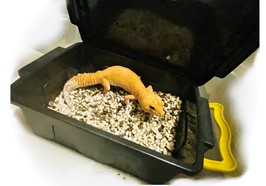
A terrarium, either from glass, acrylic or chipboard is among the favourite choices. Whatever you decide, it must be closed right around and have proper ventilation. Leo’s are master escape artists. Ensure that the enclosure you pick, can lock or possess a good closing mechanism.Minimum size, becomes a highly discussed topic. Keeping in mind how reptiles muscles work, most international (and home-ground) breeders and experts keep their Leo’s in an equivalent to a Formosa 11Liter tub (47cm x 34cm x 10cm). Breeder Leo’s thrive in this space because of the daily routine most breeders perform in regard to infection control, hygiene, health and other maintenance.
According to the National Library of Medicine’s website, the life science journal entry on the Effect of Enrichment on Leopard Geckos Housing, it was concluded that no significant differences were found in Leo’s mental development, whether housed in a low-stimulus rack system, or kept in a bio-rich terrarium. The Leo housed in a low-stimulus tub, did show a slightly higher than normal curiosity towards newly introduced items, but overall nothing too substantial to affect the Leo’s quality of life.
The tub or terrarium size rarely manages to resemble your Leo’s normal home range, but the Leo we know today in the hobby, is a multi-decade captive-bred, domesticated version of its wild cousin. Some morphs even pointing to the inability to be able to fend for itself in the big wide world outside your front door.
When looking at Pet Leo terrariums, I would not suggest a space smaller than 60cm x 30cm x 40cm, but ideally one Adult Leo should have a space of 90cm x 45cm x 45cm.
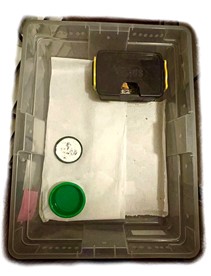
- A Heat-pad – Heat plays a very important role when you house an Ectotherm. Without heat, your lizard cannot digest its food, and without heat, Leo’s body functions will slow down. Lizards can survive months without heat. In nature, Leopard Geckos go into a Brummation period, where they sleep most of the time during the cold months. Leopard geckos (and most Ectotherms) can safely tolerate temperatures as low as 16C without a heat source.
I recommend a heat-pad with a minimum of 14W and nothing higher than 30W. Install this heat-pad inside the terrarium, and the moist in Hide where it will not come in contact with water. Some Pet Lizard Keepers place a ceramic tile over the heat-pad to help distribute the heat and keep it consistent. Position the heat-pad closer to one side of the terrarium in order to create a ‘warm side’. This side’s heat should not exceed 32C.
Provide a cooler spot on the other side as well, by voiding this area of a heat source. The cooler side, should preferably not drop below 21C. Remember how I said Leo’s are smart? They are clever enough to self-regulate and will move around the terrarium according to their needs.
Alternatively, you can connect your heat source to a temperature-controlling system. It works well in terrariums where there is little to no cross or top ventilation. It will make sure your Leo’s space doesn’t heat up too much to be damaging.
- Moist Hide – Leo’s shed their skin on average 1–2 times every 2 months, depending on temps, stress, injury, hygiene and seasons. Their colour will get dull, almost like a thin milky layer that covers their bodies. That’s the tell-tale sign that they are getting ready to shed.
Normally, Leo’s shed without problems when humidity runs higher (around 40-50%), but we live in South Africa where the air is dry. So to aid them in this time, we place a water-tight container/hide directly on the heat pad, that we fill with a substrate of our pick, and keep it moist (not soaking). Personally, I prefer a 400ml Tupperware for an adult, with a tight-fitting lid, and a hole cut into it. It is practical and provides good water-proof insulation, to retain maximum humidity. Pet-shops also sell aesthetically pleasing designs. It’s important to remember that this hide needs to be completely sealed except for the hole.The moist hide is a permanent hide in the Terrarium. You can add other hides to the enclosure and spread them out, but the most important one is the moist hide.
The biggest enemy I faced in my time with Leo keeping, is mould. It is harmless enough, but it’s also a deadly silent killer when the spread of fungus is not kept at bay. This will be one of the biggest responsibilities you have to tend to. Check at least twice a week because it can easily become a breeding ground for germs due to the high humidity and warmth. Bad moulting can cause Leo’s to lose toes, skin and even clog up their (in males) pores and nose vents.
In really severe cases, I have seen Leo’s develop bad infections when their bodies struggle to secure naturally, as well as lose their whole hands and feet. The worst I have seen is Leo’s losing sight due to the skin build up after months of moult that sticks to the inside of the eyelid, causing damage to the eyeball.
A popular choice for moist hide substrate is Peat Moss or Sphagnum moss. I personally recommend a 50/50 mix of Vermiculite and Perlite. Moss tends to develop fungal growth. Both Perlite and Vermiculite are far less inclined to promote fungus. Your Leo can be quite a silly Lizard, and might ingest it from time to time. But fear not! It will pass safely through their digestive tract.
Just in case and as a precaution, sterilize all fresh bedding with F10 SC before using it. Alternatively, add boiling water to your preferred substrate (whether moss, or vermiculite or perlite) at 1:1 ratio, and microwave for a minimum of 3 minutes at 900W.
Fresh bedding for your moist hide must be replaced once a month or sooner if it becomes contaminated with poop, dead feeders, or you notice fungus developing.
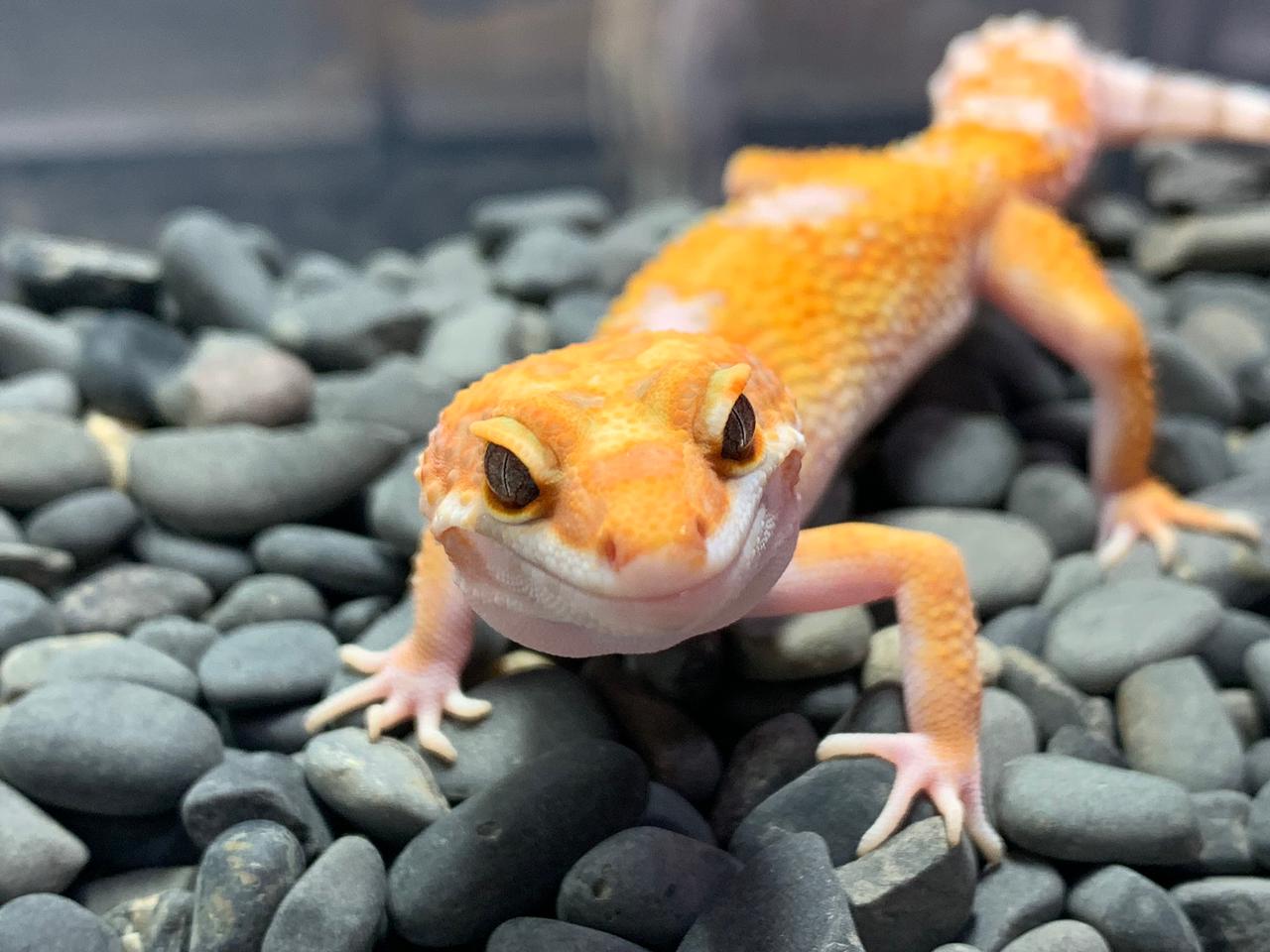
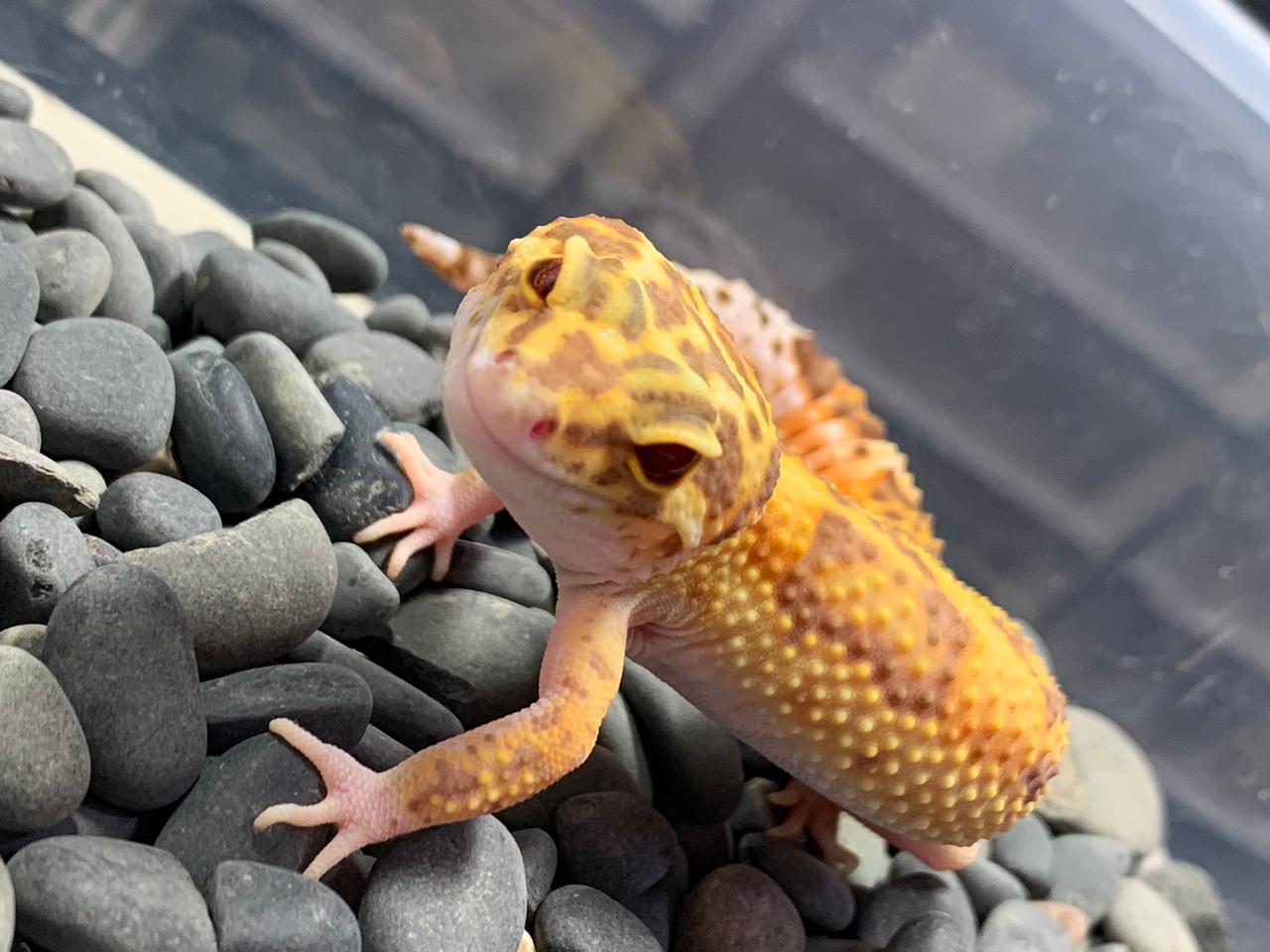
- Water Bowl – A water bowl, filled with fresh water, should be available for your Leo, at all times. The bowl should be checked daily for contaminants and topped up when needed.
Clean your bowl properly once a week with a good quality dish-washing liquid or F10 SCXD, and make sure you rinse thoroughly before adding fresh water again.
- Calcium Bowl – Leo’s truly are the experts at what they need to be healthy. It always amuses me how they seem to know what is good for them! In the wild, their natural diet provides enough calcium for Leo’s to remain in a tip-top shape. In captivity, we feed them what the hobby provides. Feeders like dubia and hissie roaches, provide a lot of the protein and nutrients they need, but only one feeder, in the SA Hobby, provides the perfect ratio of calcium to phosphor. (refer to the nutrition section)
Because of the dietary limitations, lizard keepers added supplements to their pet’s diet to counter the shortcomings, with great success to Leo’s keeping.
I have noticed that there is a bit of confusion regarding the calcium/vitamin dosage when it comes to Leopard geckos, compared to other lizards. Leopard geckos need a lot more than, for example, chameleons and Crested Geckos. As you will also learn in the nutrition section, a lot of the favourite insectivore feeders actually neutralises Calcium. The well practised ‘dusting’ of the feeders, simply will not cater to a Leo’s daily calcium needs. This is where you have to learn to trust your Leo’s intelligence. Place a second bowl in your pet Leo’s terrarium, and always make sure it contains a good quality Calcium or Calcium/vitamin mix. Do not overfill the bowl, as the calcium sometimes becomes contaminated, and it wastes when you have to clean and replace it.
We fill our calcium bowls with a very thin layer, that we spread out evenly across the bottom surface of the bowl by lightly shaking it. That way, we will always be able to notice when our Leo is still ingesting its calcium regularly, through the ‘licking spots’. Sometimes they go through calcium really quickly, and other times the bowl will remain untouched for a week or two, before we notice the licking spots again. When your Leo stops licking the bowl for 3–4 weeks, take careful note of its condition to avoid issues like MBD (a Bone Decease that makes the bones go soft due to the lack of calcium).
Let your Leo decide how much calcium they need. Ensure your calcium bowl remains dry at all times, to avoid harmful fungal or bacterial build up. Clean this bowl once a month or sooner if the bowl becomes contaminated. Check weekly and top up when needed.
If you feed a variety of feeders, a multi-vitamin and mineral supplement might not be needed. But it can’t do harm if you prefer to buy a full spectrum vit/cal supplement.
- Sunlight/vitamin D – Leopard geckos do not need sunlight to survive. Speciality lights are very expensive and not a necessity in their terrarium. They spend most of their daytime hours hiding away from the light of day in the wild. But that being said, Leo do need exposure to natural daylight (UVB) every day in order for their bodies to synthesize vitamin D. This vitamin plays a big role in the absorption of calcium.
According to South African glass regulations, a standard house window blocks most if not all UVB rays. If you decide to go the natural route regarding vitamin D, place the terrarium close to where the sunlight isn’t filtered by a window glass. Do not place them in direct sunlight, as long as the light enters the room where they are kept. With personal experience, this will be enough exposure to keep your Leo thriving and healthy.
Alternatively, SA hobby does provide a synthetically produced Vitamin D3. When purchasing your calcium, ensure that it also contains this vitamin.
-
Not need to have, but nice to have
-
Thermostat – This is more a need to have. It will help you understand the average temperature in your lizard’s home, and also help prevent excessive temperatures that could harm your Leo.
-
Your Leo knows that every year brings seasons. And with the cycle of the seasons, it also understands that there is a cold part of the year, and a warm part. This aids your pet’s inner cycle as well. When to Brummate, and when to ovulate.
Brummation is very close to Hibernation. The difference is your pet will not go and sleep the cold months away. Instead they will slow down, and not eat so much. Their activity level will also be affected, so don’t stress too much when your little one is choosing to hide away in their hides, during the colder days of the year.
Ideally place a thermometer in the warm side of your terrarium (temps should be around 28C – 30C. NOT higher than 32C) and a hygrometer/thermometer in the cool end of the terrarium (temps should NOT drop below 18C but can be as high as 26C. humidity should be maintained in this corner between 30-40%)
- Substrate vs paper-towel – as a breeder, I prefer using a paper towel. The benefit is infection control.
My motivation in regard to keeping Leo’s is; “what would clean with the least effort, and what is the easiest to keep hygienic.”Using substrate like peat or bark or pebbles offers a more natural tone to your setup. It adds character and creates a better ambiance than towels. Another alternative is to use pebbles, small rocks and even artificial grass or reptile carpet.
In the wild, Leopard geckos, like other reptiles, have adapted to licking mineral-rich clay and sand as a means to recover important plant nutrients. In captivity, Leo’s still have that inclination to lick and ingest substrate if they feel their bodies need more than what we give them. Many Leo owners have kept their pets successfully on substrate of a sort. But take special note when doing so. Impaction from ingested substrate, can make your pet very ill. Sometimes it results to death if the impaction cannot be cleared in time.
-
-
Lights – Leopard geckos do not require any special lights, whether it is an infra-red for heat, or a UVB light for the metabolising of vitamin D. As discussed earlier, natural sunlight (and vitamin D3 supplements) more than suffice for their daily needs, but if you decide to add a UVB light in their terrarium, they will benefit from it nonetheless. Remember to add a timer, so the light runs on a daytime/ nighttime cycle. Some pet keepers prefer a live vivarium for their Leo’s, which naturally would include an artificial daylight source to help the plants grow.
When choosing a UVB light, aim for 5-10%. That should be a T8 or a T5 tube. Formal testing results on the Merck Veterinary Manual website, state that the optimal wavelength for synthesizing provitamin D in the skin is 293 nm. But be cautious when using UVB lamps. It can be toxic to your animal with overexposure. Your Leo needs between 30 min and no longer than 2 hours of UVB per day. UVB lights needs to be replace them every 3–6 months. Even if they still emit light, their potency wears down fairly quickly.
Overhead heating, like infrared lights or ceramic heating, creates too much heat. The heat pad caters to your pet’s needs. Leo’s spend most of their inactive time nestled away in their hides. This is why under-the-hide heating is so important.
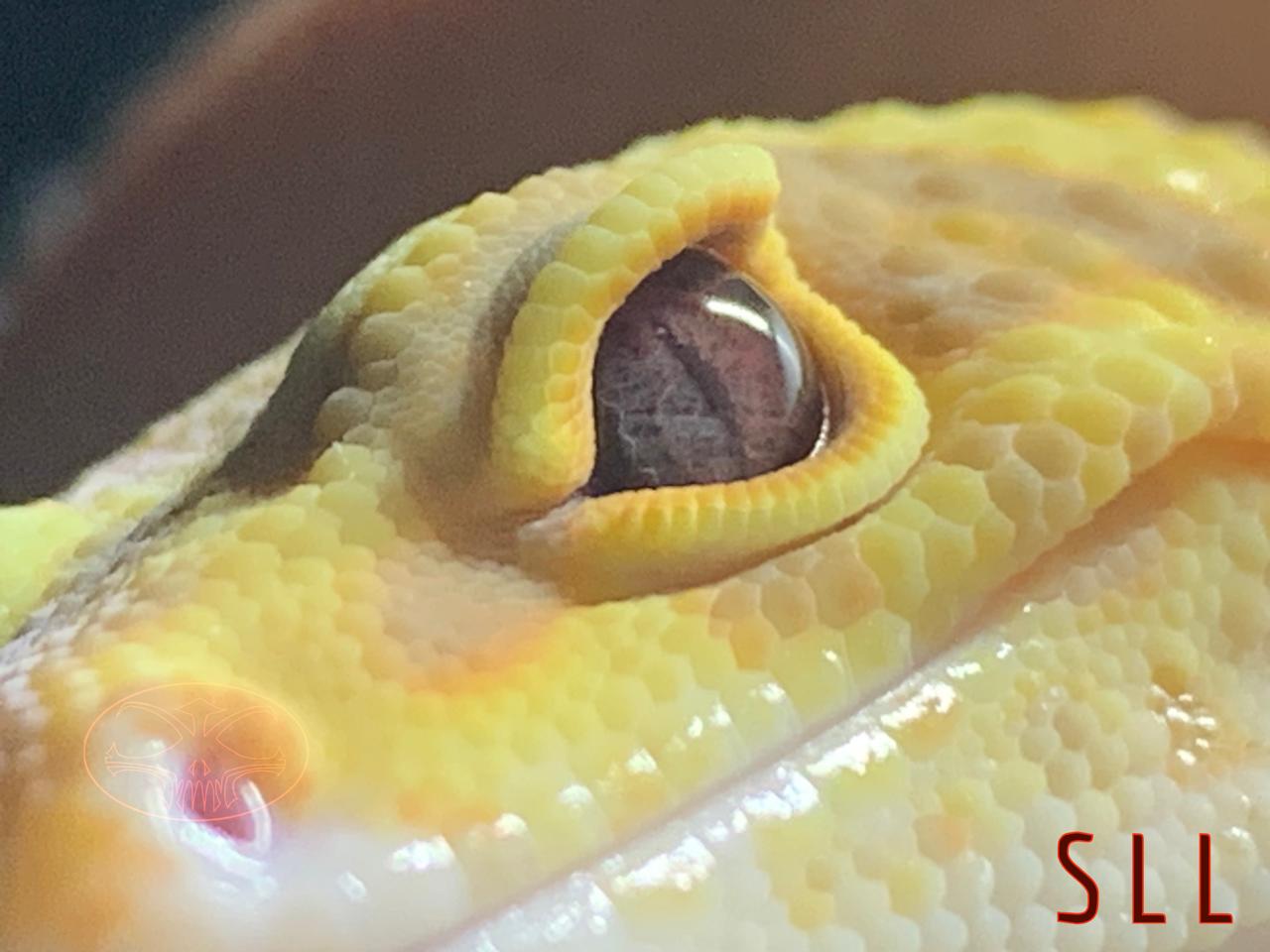
When investing in speciality lights for your Leo, make sure you understand the function of the light you are buying. Some UV lights also provide heat. This can be problematic as it could add to the ambient temperature inside the terrarium. Normal overhead lights, or special day/night-time lights can also be added. Fill your Leo’s space up with loads of hiding spots. Leopard geckos do not enjoy daytime lights and will look for a shadow or darker place to hang in its daytime. Especially be aware that albinos do not do well with bright lights. Their eyes are more sensitive than normal Leopard geckos because of the lack of protective pigment in their eyes.
-
Lights – Leopard geckos do not require any special lights, whether it is an infra-red for heat, or a UVB light for the metabolising of vitamin D. As discussed earlier, natural sunlight (and vitamin D3 supplements) more than suffice for their daily needs, but if you decide to add a UVB light in their terrarium, they will benefit from it nonetheless. Remember to add a timer, so the light runs on a daytime/ nighttime cycle. Some pet keepers prefer a live vivarium for their Leo’s, which naturally would include an artificial daylight source to help the plants grow.
When choosing a UVB light, aim for 5-10%. That should be a T8 or a T5 tube. Formal testing results on the Merck Veterinary Manual website, state that the optimal wavelength for synthesizing provitamin D in the skin is 293 nm. But be cautious when using UVB lamps. It can be toxic to your animal with overexposure. Your Leo needs between 30 min and no longer than 2 hours of UVB per day. UVB lights needs to be replace them every 3–6 months. Even if they still emit light, their potency wears down fairly quickly.
Overhead heating, like infrared lights or ceramic heating, creates too much heat. The heat pad caters to your pet’s needs. Leo’s spend most of their inactive time nestled away in their hides. This is why under-the-hide heating is so important.
When investing in speciality lights for your Leo, make sure you understand the function of the light you are buying. Some UV lights also provide heat. This can be problematic as it could add to the ambient temperature inside the terrarium. Normal overhead lights, or special day/night-time lights can also be added. Fill your Leo’s space up with loads of hiding spots. Leopard geckos do not enjoy daytime lights and will look for a shadow or darker place to hang in its daytime. Especially be aware that albinos do not do well with bright lights. Their eyes are more sensitive than normal Leopard geckos because of the lack of protective pigment in their eyes.
Call to book your stall
+ 27 (0)83 374 7087